skip to main |
skip to sidebar
 Great news to all participants. In support of the Discover Your Talent program, we encourage students/participants to attend a special workshop which will be held every Friday evening from 4pm - 6pm until 16th of January 2010. We will provide advanced training and consultation to enhance your project.
If you already submitted the form... please don't miss this opportunity by attending the class, because it's totally free and it is just for you!
 Aerospace Education Services in Conjunction with Advanced Micro Devices Malaysia is delighted to announce the first Design, Animation and Gaming Competition for all students who have participated in our Kidz CAD courses.
With the assistance of AMD we are going to offer an awesome series of prizes to participants that include Sony PSP players, Personal DVD players, MP3 Players... Read More
 (Dec 22, 2009) We're lucky Earth resides in the Milky Way's suburbs. Intense comet bombardment near the galaxy's center may make it tough for life to gain a foothold there. More than twice as many comets are shaken loose to potentially hit planets at half our distance to the center, according to simulations by Marco Masi of the University of Padua, Italy, and his colleagues.
Read more. Source: New Scientist
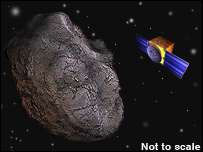
 (Dec 31, 2009) The head of Russia's federal space agency has said it will work to divert an asteroid (Apophis) which will make several passes near the Earth from 2029. Anatoly Perminov told the Voice of Russia radio service that the agency's science council would hold a closed meeting to discuss the issue. Any eventual plan is likely to be an international collaboration, he said.
Read more. Source: BBC
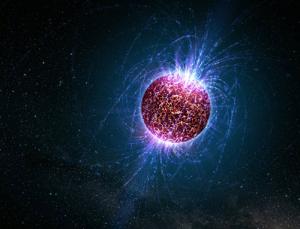
 (Jan 6, 2010) A new class of star may recreate the conditions of the big bang in its incredibly dense core. Neutron stars were once thought to be the densest form of matter that could resist collapsing to become black holes. More recently, physicists have argued that some supernovae may leave behind even denser quark stars. Now, a study led by De-Chang Dai of the State University of New York in Buffalo says the deaths of very massive stars may lead to "electroweak" stars that creep even closer to the black hole limit. Read more. Source: New Scientist
 Great news to all participants. In support of the Discover Your Talent program, we encourage students/participants to attend a special workshop which will be held every Friday evening from 4pm - 6pm until 16th of January 2010. We will provide advanced training and consultation to enhance your project.